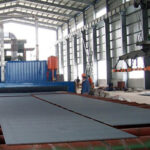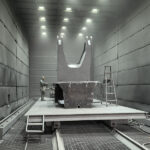
A casting can leave the shakeout station with its shape clearly visible and still carry sand on its surface. Loose moulding sand has fallen away, but material can remain attached around ribs, recesses and changes in section. Those areas need attention before the part moves through finishing.
For sand-cast iron and steel parts, shakeout and surface cleaning do different jobs. Understanding that distinction helps keep residual sand from becoming a problem for the next operation.
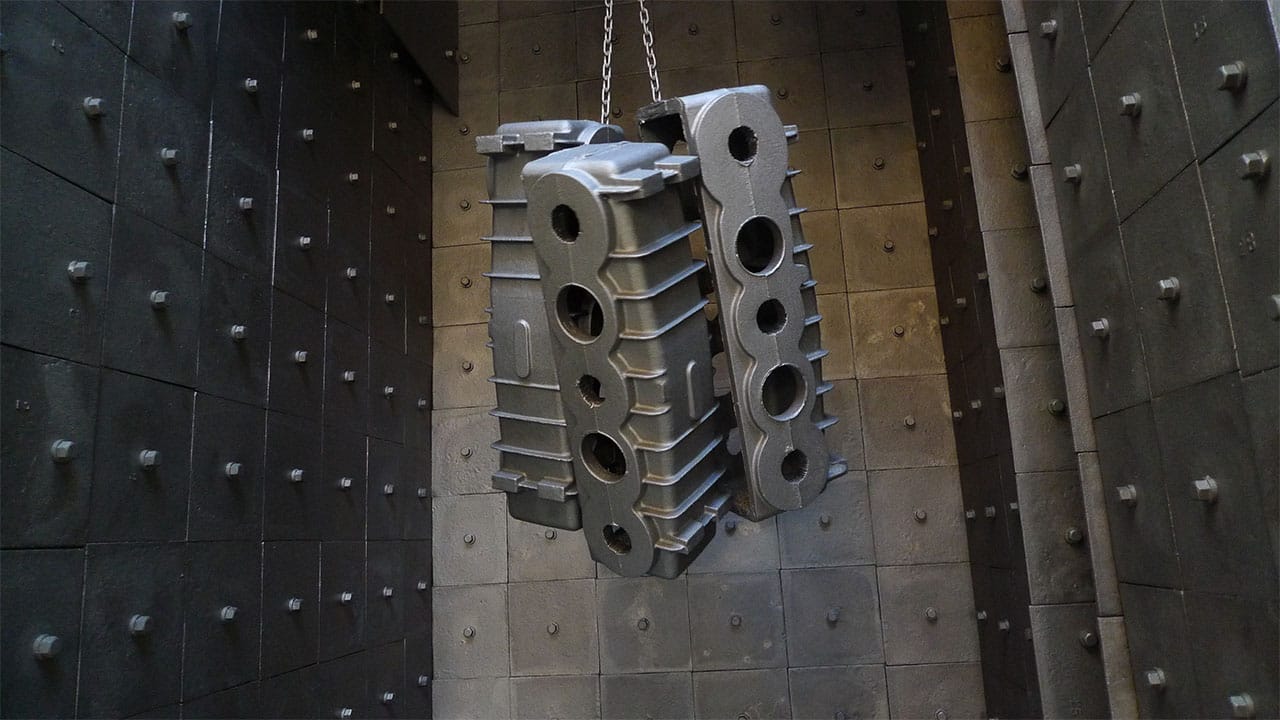
Out of the mould, but not yet clean
Shakeout breaks up the mould and separates the casting from the bulk of the sand. It does not, by itself, confirm that the surface is ready for inspection, machining or coating.
The residue also matters. Loose sand, firmly adhering mould material and oxide scale do not all behave alike. A casting that sheds sand during handling needs a different response from one with a stubborn patch still bonded to the surface.
The foundry route should account for those conditions. Removing bulk sand upstream avoids asking the blasting stage to do the entire job of mould breakdown.
Where shot blasting contributes
Blast wheels accelerate metallic abrasive towards the casting. Repeated impacts help detach adhering surface sand and scale from areas reached by the blast stream. Separating the released sand from reusable abrasive is part of that process.
Exposure matters as much as the appearance of the easiest face to clean. A clean outer face does not prove that a recess or internal passage is clean. Deep cavities and remaining cores may need a separate operation; an external wheel-blast process should not be assumed to clear them.
In production, the useful result is a surface whose remaining condition can be assessed against the casting’s requirements. It becomes easier to distinguish removable residue from a feature that needs fettling, inspection or another form of attention.
Cleaning does not finish every casting feature
Shot blasting is one stage in the finishing route. Gates and risers still need their designated removal operation. Parting-line fins and substantial metal projections may require chipping or grinding. Blasting should not be described as a universal replacement for those tasks.
It also does not repair porosity or cracks. If cleaning exposes a suspect area, the response is inspection and a decision under the applicable quality procedure. A brighter surface is not evidence that the casting is sound.
Before releasing the part, check the specified areas for remaining sand and scale, give attention to recesses, and check for retained abrasive where the geometry can trap it. The acceptance decision should follow the drawing and process requirements.
A defined handover to the next operation
The cleaning stage should have a clear output: a casting suitable for the next agreed operation, with any remaining work identified.
HQAMUR manufactures hook type shot blasting machines for suspended handling and tumble belt shot blasting machines for suitable batch parts. These are ways to present the work to the abrasive; the cleaning task still starts with the residue and the surfaces that need treatment.
The useful question after shakeout is what remains on the casting—and what must be removed before it moves on.