The Costly Conflict Between Raw Castings and Precise CNC Tooling
In the heavy equipment manufacturing sector—such as machine tool beds, large gearbox housings, and marine diesel engine blocks—achieving high-precision dimensional tolerances requires extensive CNC machining. However, raw iron castings straight from the foundry mold carry a critical operating hazard: chemically and mechanically bonded burn-on sand (silica debris) and heavy oxide scales.
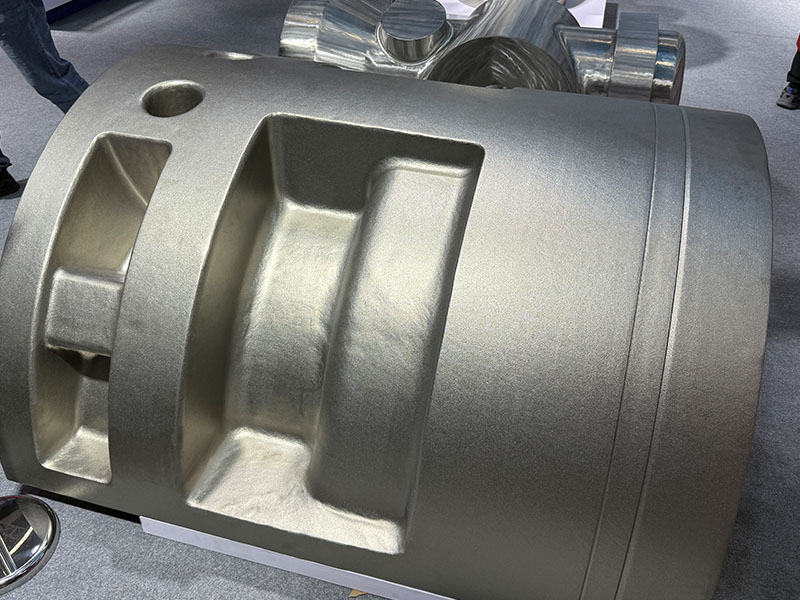
For machine shop managers, running an expensive carbide or ceramic cutting tool into an unrecognized patch of burn-on sand is catastrophic. Silica sand has a Mohs hardness far exceeding that of structural grey iron or ductile iron. The moment the CNC insert strikes a sand pocket, it experiences severe abrasive wear, leading to instant micro-chipping, tool breakage, and ruined machining schedules.
Furthermore, thick, uncleaned sand layers act as a physical mask that hides microscopic surface porosity and shrinkage cavities. If these subsurface voids remain uncovered before machining, the workshop will waste hours on precision milling, only to expose a leaking defect at the final inspection stage, scrapping the entire high-value component.
How Controlled Shot Blasting Safeguards Machine Shop Efficiency
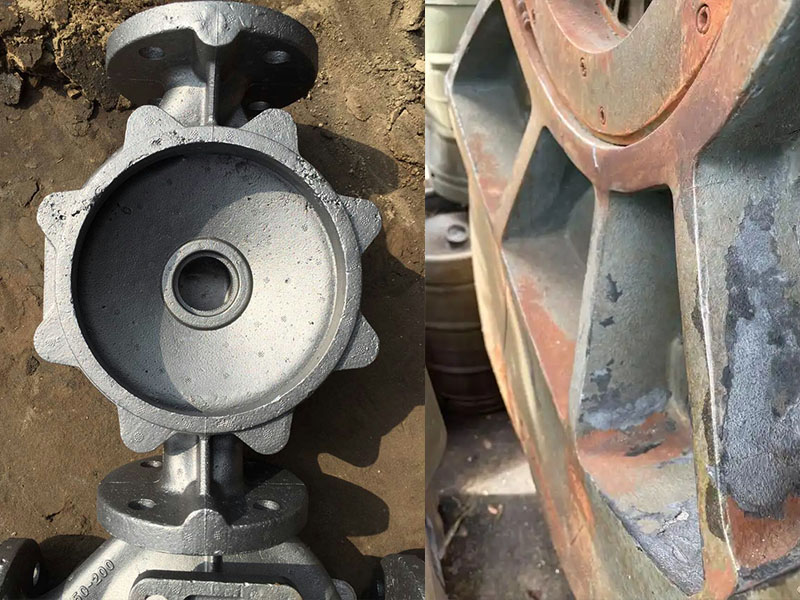
Relying on manual chipping or simple wire brushing cannot pull hard sintered sand out of complex casting contours and deep undercut pockets. An automated, heavy-duty shot blasting system solves this via localized mechanical impact, delivering two non-negotiable benefits:
1. Shattering the Silica-Metal Bond via Kinetic Energy
An industrial blast wheel throws high-density, high-hardness metallic abrasives (often a mix of steel shot and steel grit) at velocities exceeding 70 meters per second. This massive kinetic energy instantly pulverizes the brittle silicate structures of the burn-on sand. Because the steel blast media has a higher impact energy than manual air blasting, it completely shears the bond between the sand and the underlying raw iron, stripping the casting down to its bare gray iron structure without damaging critical dimensional datums.
2. Unmasking Sub-Surface Defects Early
The micro-bombardment of heavy-duty steel grit serves as a high-speed inspection tool. It clears away all surface scales, carbon coatings, and sand aggregates from microscopic pitting, casting seams, and surface voids. This leaves the iron casting completely “naked” and clean (achieving a strict Sa2.5 grade), allowing quality control inspectors to run reliable magnetic particle or visual checks before the part ever mounts onto a CNC machine table.
Heavy-Duty Automated Configurations for Diverse Foundries
Depending on the specific geometry, single-piece weight, and production volume of the iron castings, we provide three distinct mechanical configurations to ensure optimal blasting exposure and workflow integration:
Designed for high-throughput, automated automotive and high-volume component foundries. Castings are suspended from a continuous, motorized overhead closed-loop chain rail that moves them smoothly through the blasting chamber. As the chain advances, the hangers rotate inside the blasting zone, ensuring the high-efficiency blast wheels strike every internal undercut and deep cavity uniformly. This setup perfectly interlocks with robotic loading and unloading sequences for continuous 24/7 workflows.
The ideal solution for heavy, asymmetrical, medium-to-large castings that arrive in mixed batches (such as custom valve bodies or complex machinery brackets). The workpieces are hung on independent motorized hooks that travel into the chamber. Once inside, the hook rotates and oscillates, allowing the blast streams to clear out stubborn sand from all angles without requiring complex fixture changes.
Engineered specifically for massive, monolithic iron castings that cannot be hung, such as 10-ton machine tool beds or heavy mining equipment chassis. The heavy parts are loaded directly onto a motorized heavy-duty trolley that rolls into the chamber. Inside, the platform rotates under a multi-directional abrasive downpour, exposing large, flat surfaces and heavy joint lines to direct high-velocity steel grit impacts.
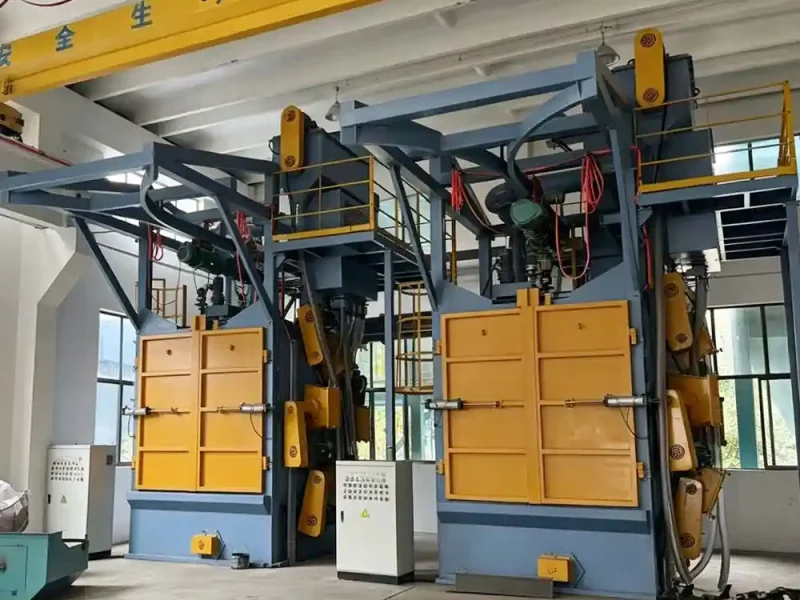
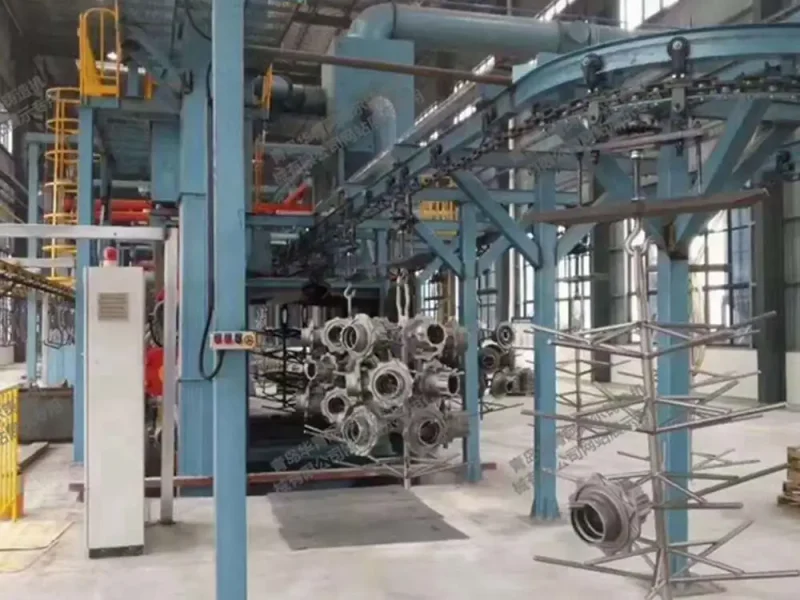
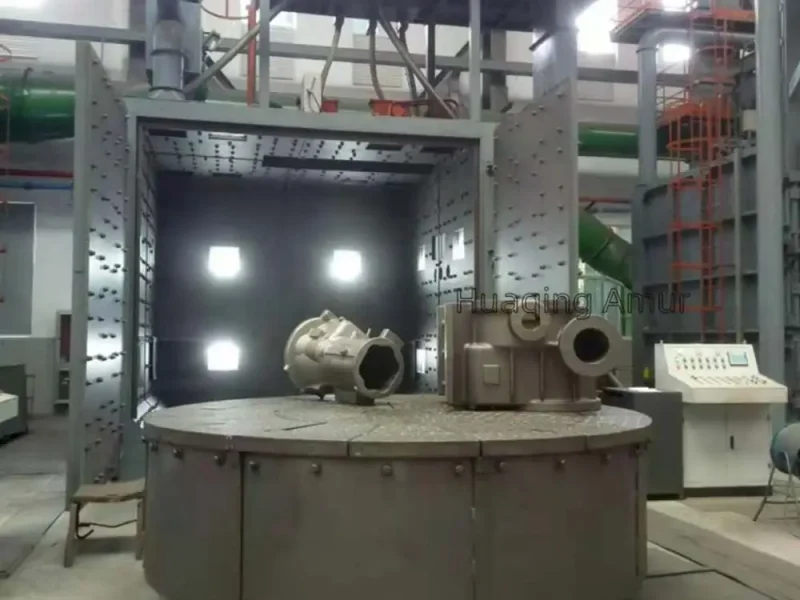
Every HQAMUR system integrates premium Cr27 wear liners and multi-stage air-wash separators to separate high-volume casting sand from the usable steel grit mix, maintaining maximum cutting efficiency hour after hour.
Elevating Industrial Surface Prep Standards
At HQAMUR, we design our full line of blasting machinery to withstand the highly abrasive environments of modern foundry and machining shops. By combining heavy-duty engineering with smart PLC frequency control and premium alloy wear parts, we help manufacturers protect their high-value downstream precision tooling and secure clean, standard-compliant metallic profiles.