The Hidden Threat in Heavy Structural Steel
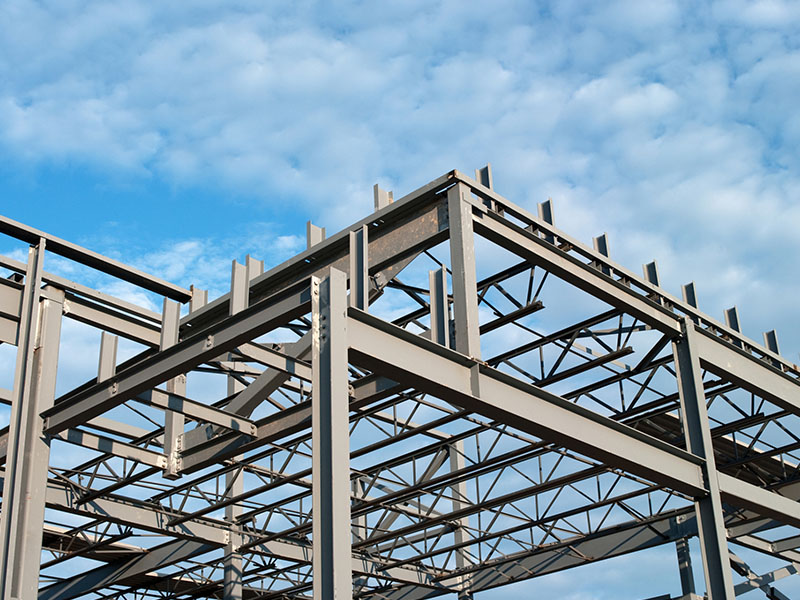
In modern high-rise architecture, heavy-industrial plants, and long-span bridge construction, heavy H-beams and built-up welded plate girders bear massive static and dynamic loads. However, during the hot-rolling, flame-cutting, and subsequent high-heat welding fabrication processes, these thick steel sections inevitably develop severe localized internal residual stresses.
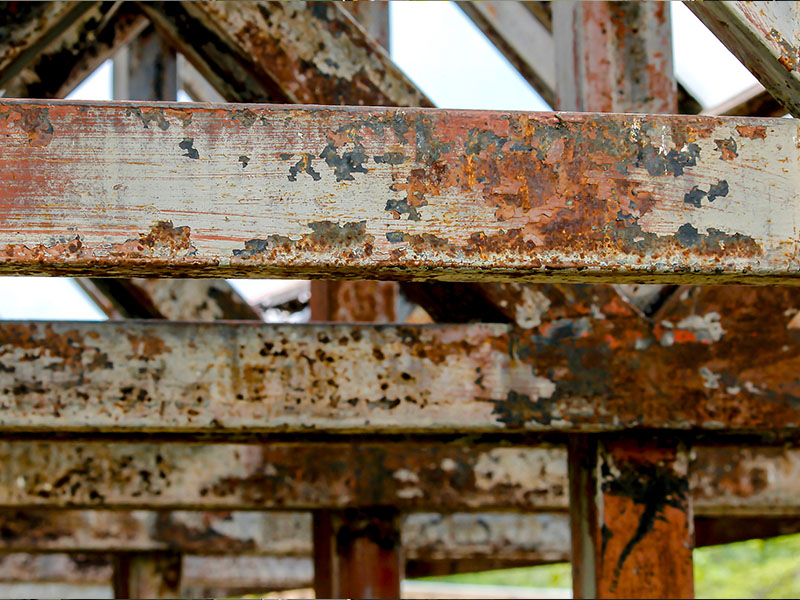
As the steel cools unevenly, tensile residual stresses concentrate near the welded seams and heat-affected zones (HAZ). If left untreated, these internal forces work quietly under the building’s structural load, creating invisible micro-fissures along the grain boundaries. Over time, these micro-cracks propagate, leading to sudden stress corrosion cracking (SCC) or catastrophic structural fatigue failure without warning.
Metallurgical Benefits of High-Velocity Shot Blasting
1. Converting Tensile Stress to Beneficial Compressive Stress
When a high-efficiency blast wheel bombards the H-beam surface with millions of high-velocity steel shots, each impact acts as a microscopic hammer blow. This intense kinetic energy causes localized plastic deformation on the steel’s outermost layer. As the deeper metal grains resist this movement, a uniform layer of residual compressive stress is introduced into the surface profile. This compressive layer effectively neutralizes the dangerous tensile stresses caused by welding, locking the surface and preventing micro-fissures from opening.
2. Eliminating Hydrogen Embrittlement Risks
During heavy welding and flame cutting, steel often absorbs atomic hydrogen from moisture and chemical fluxes, leading to hydrogen-induced cracking (HIC). The high-frequency micro-peening action of heavy-duty shot blasting helps disrupt the localized hydrogen traps near the surface weldments, relieving the microscopic crystalline tension and drastically reducing the risk of delayed brittle fractures in heavy welded junctions.
3. Generating a Consistent Mechanical Anchor Pattern
Beyond stress relief, high-velocity blasting texturizes the steel surface, producing a uniform peak-to-valley roughness (typically Rz = 45 um to 75 um). This structural micro-roughness removes slippery mill scale and creates an optimal profile that interlocks with high-performance structural primers, eliminating coating peeling under extreme building vibration or seismic shifting.
Automated Roller Conveyor Integration for Heavy H-Beams
For massive structural geometries like heavy H-beams, box columns, and welded trusses, manual air blasting rooms cannot deliver the consistent impact kinetic energy required for metallurgical modification. Manual work leaves human-error zones with uneven stress relief.
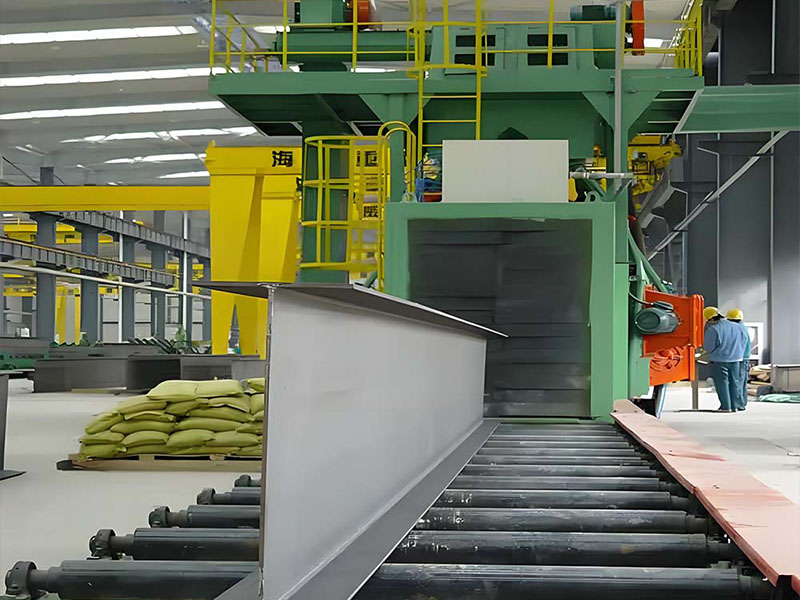
By running structural elements through a heavy-duty H-Beam Roller Conveyor Shot Blasting Machine, the fabrication shop ensures that multiple multi-angle blast wheels discharge abrasive symmetrically. This synchronized automated sequence treats the top and bottom flanges, as well as the central web plate, simultaneously in one single pass. The result is a structurally altered, stress-relieved steel element that satisfies both the strict aesthetic Sa2.5 grade and the rigid internal quality standards required for elite infrastructure projects.