Square tube shot blasting removes rust and mill scale from the external surfaces of steel tubes before painting or further fabrication. For straight carbon steel square hollow sections (SHS) and rectangular hollow sections (RHS), equipment selection starts with stable conveying and abrasive coverage on all four outer faces.
A quotation should explain how the proposed machine handles your tube sizes, how several tubes can be loaded together, and what surface condition can be achieved at the required output. These details determine whether the equipment suits your production.
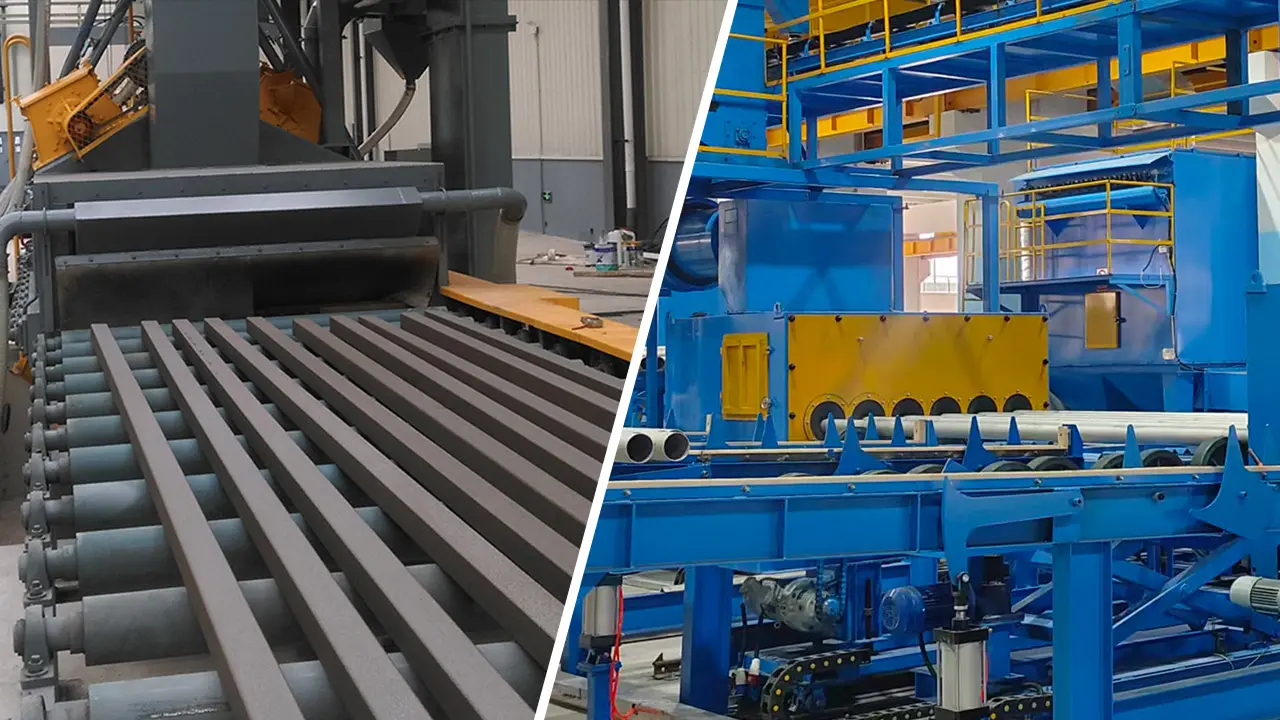
Rectangular tubes and round pipes require different handling and abrasive coverage arrangements. Equipment selection should account for the workpiece shape and loading method.
1. Match the Conveying System to the Tube Shape
Straight square and rectangular tubes can often be processed on a roller conveyor, with blast wheels positioned to expose the required external surfaces as the workpieces travel through the chamber. The HQAMUR Q69 roller conveyor shot blasting machine is one equipment type to assess for this application. Tube dimensions, loading arrangement and blast wheel layout still need to be checked for the proposed configuration.
Round pipes may use a different handling arrangement. Our steel pipe external shot blasting machine uses skew rollers to rotate and advance cylindrical workpieces. That arrangement should not be assumed suitable for square tubes.
Some roller conveyor systems can also handle round pipes. If one line must process both shapes, confirm the conveying and blasting arrangement for each.
2. Check Coverage on All Four External Faces
Ask the supplier to show how the abrasive reaches the top, both sides, the lower face and the transitions around the corners. The position and direction of the blast wheels matter, particularly when tube height or orientation changes.
For welded tubes, include the external weld seam in the inspection. Also check areas where conveyor components or neighbouring tubes may restrict abrasive access.
Assess the complete outer surface of a representative tube. A photograph of the upper face alone cannot establish cleaning quality on the sides and underside. If the production mix includes several sections, agree which sizes and loading arrangements will be checked during acceptance.
3. Confirm the Spacing Between Tubes
Loading several tubes side by side can make better use of the conveyor width, but closely packed tubes can shield the faces between them. The number that physically fits across the opening is therefore only a starting point.
Ask for a loading sketch showing tube orientation, the clear gap between tubes and the number per row. A layout suitable for low rectangular sections may need changing for taller sections. There is no single spacing value that suits every tube size and blast wheel arrangement.
When comparing output figures, ask how many tubes are processed together, at what spacing, and to which cleaning requirement. Keep that arrangement consistent in any cleaning trial.
4. Check Support for the Shortest and Longest Tubes
Tube length affects roller support and handling at both ends of the machine. Short pieces need a roller pitch and transfer arrangement that keep them supported as they enter, pass through and leave the blasting chamber. Long tubes need suitable infeed and outfeed support.
Give the supplier your minimum and maximum tube lengths, together with section dimensions, wall thickness and weight. Ask for the minimum permitted workpiece length for the proposed conveyor.
If you process thin-walled sections, include them in the assessment and agree any limits on distortion or handling damage. A demonstration using a heavy section does not establish suitability for your lightest tube.
5. Confirm the Surface Result at the Required Output
Conveyor speed, initial rust or scale, abrasive condition and loading pattern all affect the result. Confirm the cleaning requirement and production rate together. The assessment should include loading, tube spacing, abrasive removal and unloading.
For tubes that will be coated, specify visual cleanliness and surface profile separately, using the project specification and coating supplier’s requirements. The appearance of a clean surface does not establish its profile depth.
Before accepting a proposal, request a representative cleaning trial or relevant test evidence. Check the agreed outer surfaces, any abrasive retained in open tube ends, and the cycle needed to produce acceptable tubes.
Frequently Asked Questions
Do square tubes have to rotate during shot blasting?
Not necessarily. A suitable roller conveyor system can use blast wheels arranged around the workpiece to clean the required outer faces without rotating the tube. Whether repositioning is needed depends on the machine layout, loading and required result.
Will external shot blasting also clean the inside of the tube?
An external blasting system does not provide controlled cleaning of the internal walls. If internal cleaning is required, assess access, tube length, internal geometry and abrasive removal separately. Our internal blasting equipment selection guide explains these access and handling considerations for pipes.
Discuss Your Tube Requirements with HQAMUR
HQAMUR manufactures roller conveyor shot blasting equipment for steel surface preparation. To assess a square or rectangular tube application, send us:
- Tube cross-sections, wall thicknesses and minimum/maximum lengths
- Material, individual weight and photographs or drawings
- Initial surface condition and required cleaning or coating specification
- Required output and current loading/unloading method