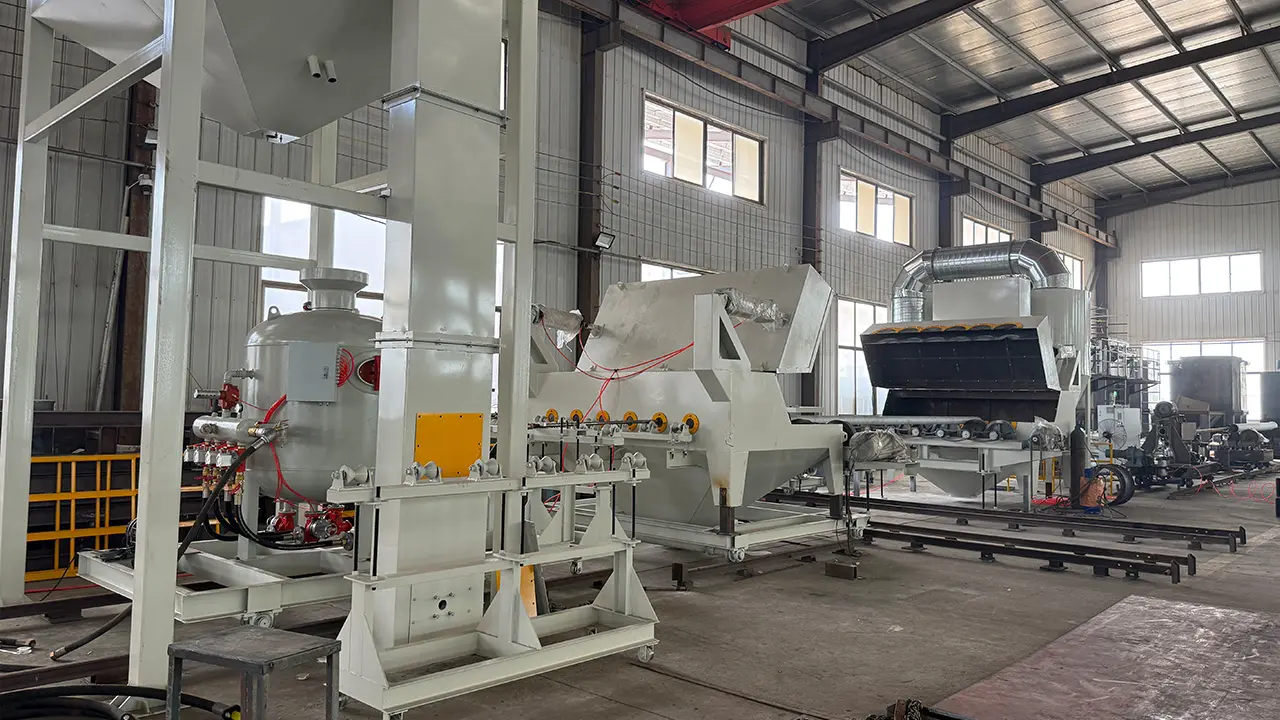
Selecting internal pipe blasting equipment starts with the space available inside the pipe. A system must do more than fit through the opening: it must position the blasting head correctly, move through the required length, and allow abrasive and dust to leave the pipe.
Pipe diameter helps narrow the equipment choice, but it does not determine the complete solution. Pipe length, internal restrictions, surface requirements and production rate must be checked together.
1. Start with the Actual Internal Diameter
Nominal pipe size alone is not enough for equipment selection. Wall thickness changes the available bore, while internal weld reinforcement, changes in section or fittings can restrict the passage further.
Provide the minimum and maximum actual internal diameters, together with drawings showing any restrictions. The equipment supplier can then assess the space needed for the blasting head, supports and movement system.
For a plant processing several pipe sizes, also confirm how the equipment changes between diameters. A suitable range on a specification sheet does not explain the adjustment work required between production batches.
2. Match the Blasting Method to the Available Space
Compressed-air systems propel abrasive through a nozzle or blasting head inside the pipe. Depending on the equipment design, a deflection head distributes abrasive around the bore, or rotating nozzles sweep the inner surface. These arrangements can be considered where internal access limits the use of a centrifugal blast wheel.
For larger bores, an internal wheel-blasting arrangement may also be considered where sufficient space and suitable production conditions are available. There is no universal pipe diameter at which every application must switch from air blasting to wheel blasting. The equipment envelope, abrasive coverage, movement and handling requirements must be evaluated for the proposed system.
Do not confuse a rotating air-blast nozzle with a motor-driven centrifugal blast wheel. Both can involve rotation, but they propel abrasive differently.
3. Check Pipe Length and Head Movement
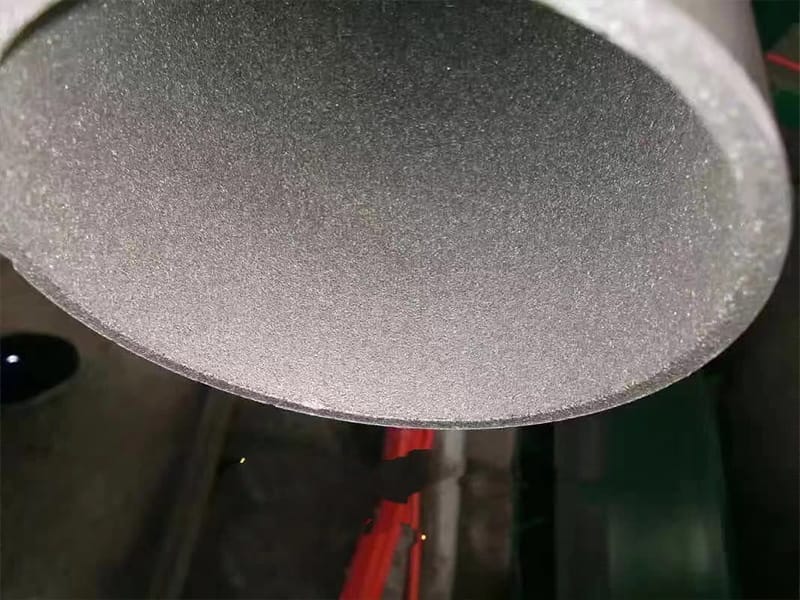
A blasting head that fits the bore still needs a controlled way to travel along it. Pipe length affects lance support, working travel and the space required around the machine.
Confirm whether the proposed arrangement moves the pipe, the blasting head, or both. Pipe rotation may be part of the design, while some rotating-head systems can operate without rotating the pipe.
Ask the supplier how the head remains positioned through the full working length and how the end regions will be treated. Bent pipes, fittings and restricted openings need separate assessment rather than being treated as ordinary straight pipe.
4. Include Abrasive Removal in the Equipment Assessment
Internal blasting also requires a practical way to remove spent abrasive and dust. Cleaning the wall and clearing the bore are connected parts of the process.
Ask how material leaves the pipe, how reusable abrasive is separated, and whether an additional clearing step is needed before inspection or coating. The answer should relate to the pipe length and production arrangement, rather than simply stating that the machine includes recovery equipment.
Visual cleanliness and surface profile should be specified separately. For coating applications, refer to the project specification and coating supplier’s requirements. See our steel pipe surface preparation guide for related process considerations.
5. Compare Complete Production Cycles
When comparing proposals, confirm whether the quoted speed refers to blasting-head travel, pipe travel or completed output. These figures describe different things.
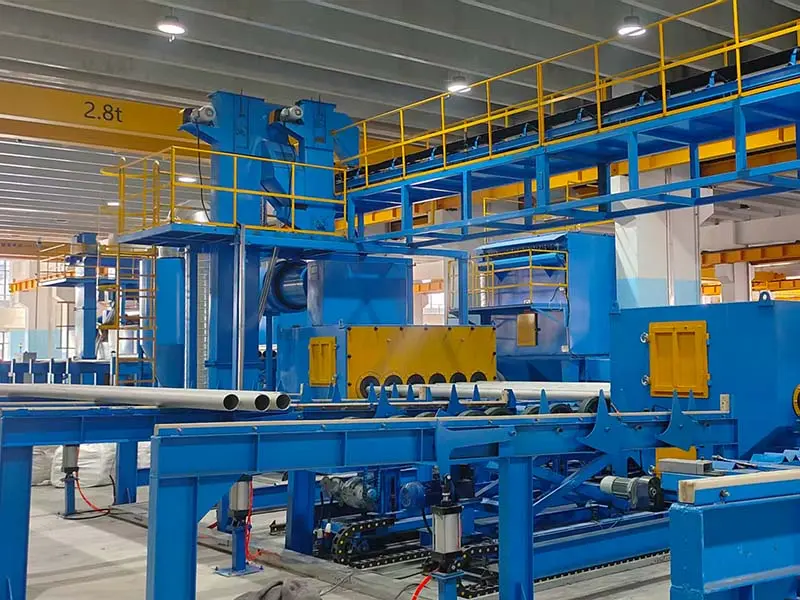
Request an assessment that includes loading, positioning, blasting, abrasive removal and unloading. A representative cleaning trial can help confirm the proposed surface result and working cycle for your pipes.
Discuss Your Pipe Requirements with HQAMUR
To assess a suitable configuration, share your actual internal diameter range, pipe lengths, wall thicknesses, internal restrictions, initial surface condition and required output. Include the cleaning and coating requirements where applicable.
Explore HQAMUR’s steel pipe internal blasting equipment or contact our team with your pipe drawings and production requirements.