The Double-Edged Sword of Surface Roughness
In utility-scale wind tower manufacturing, the steel shell is continuously exposed to harsh environmental fatigue—high-latitude winds for onshore towers and relentless cyclic salt-spray for offshore installations. To guarantee the design life, global wind energy standardizers (such as Vestas, Siemens Gamesa, and DNV specifications) require a strict multi-layer coating system, which relies heavily on the initial surface preparation grade, usually Sa2.5 or Sa3.

However, when setting up an automated blasting line for heavy wind tower sections, welding lines, and flanges, many production managers fall into a common trap: focusing only on cleanliness while neglecting the micro-topography (the surface profile) of the steel.
From a metallurgical perspective, creating a rougher profile expands the microscopic surface area, giving the zinc-rich primer a stronger mechanical grip. But if your blast wheel velocity is uncalibrated, or your operating mix contains too much oversized angular grit, you will create excessively deep, sharp structural V-grooves (high peak-to-valley values, Rz > 90 um). Under the continuous cyclic loading of a wind turbine, these sharp micro-grooves act as stress concentration points, drastically accelerating micro-fissure formation and leading to premature structural fatigue cracking.
How to Balance Adhesion and Fatigue Life
To hit the sweet spot—typically a uniform roughness of Rz = 50 um to 75 um as demanded by heavy industry specifications—the blasting process cannot rely on manual guesswork. It requires precise control over three core technical parameters:
1. Controlled Impact via Abrasive Operating Mix
Using 100% angular grit will clean fast, but it ruins the fatigue life of wind tower plates. Experienced shops use a carefully balanced Operating Mix of round steel shots and angular steel grit. The round shots continuously strike the surface to create a dimpled, wavy micro-profile (introducing beneficial compressive stress and peening effect), while a controlled percentage of angular grit cleans away the stubborn mill scale and provides the required tooth for the paint.
2. Precise Rotational and Line Speed Synchronization
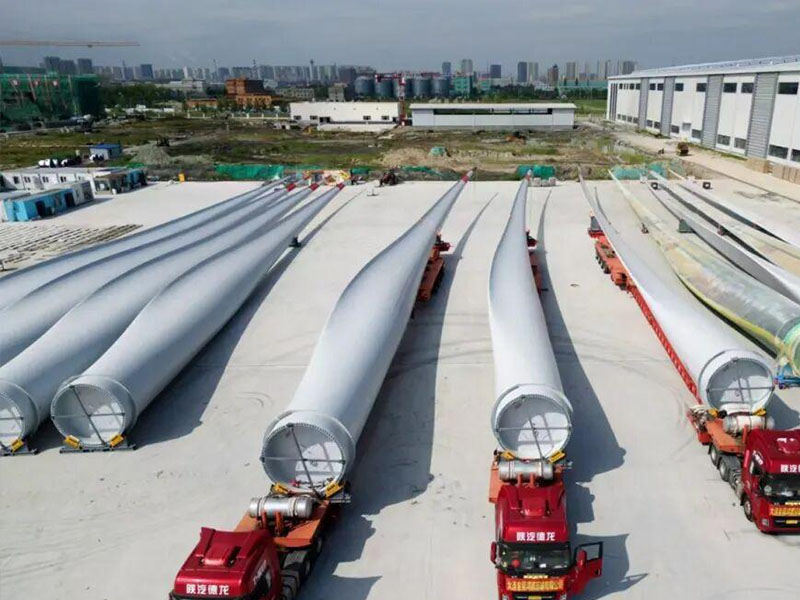
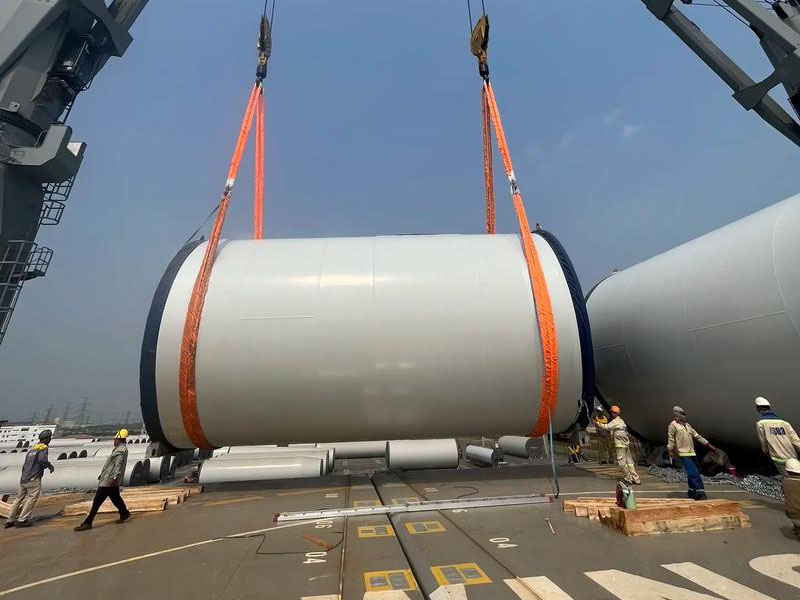
Wind tower sections are massive and heavy, usually processed on heavy-duty turning rolls while passing through the blast chamber. If the rotational speed of the section does not match the longitudinal travel speed of the conveyor, you get uneven blasting. Some areas get over-blasted (causing excessive Rz and steel thinning), while other zones are under-prepared. Modern lines must utilize VFD (Variable Frequency Drive) synchronized controls to ensure every square inch receives the exact same kinetic energy from the high-efficiency blast wheels.
3. Real-Time Fine Dust Elimination via Air-Wash Separator
If your air-wash separator is inefficient, fractured grit and steel dust will remain in the system. When blasted back onto the tower shell, this fine debris gets embedded into the steel profile. If not removed, it seals invisible air pockets under the primer, leading to osmotic blistering and severe coating delamination within 3 to 5 years of field deployment.
Elevating Industrial Surface Prep Standards
At HQAMUR, we design our automated Roller Conveyor Shot Blasting Machines, Hook Type Shot Blasting Machines, and customized blast systems with these exact mechanical balances in mind. By combining heavy-duty engineering with smart PLC frequency control and premium alloy wear parts, we help heavy industries around the world achieve stable Sa2.5 surface preparation without sacrificing the structural integrity of their components.