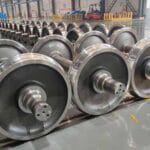
A new delivery of hot-rolled steel may show little rust, yet still carry a dark layer of mill scale. That surface needs attention before a protective coating is applied.
Mill scale removal before painting helps establish a sound base for the coating. For workshops processing steel plates and structural sections in regular production, shot blasting provides a mechanical way to remove scale and prepare the exposed steel surface.
Why New Steel Can Still Need Surface Preparation
Mill scale is an iron oxide layer formed when steel reacts with oxygen at high temperatures during hot rolling. It often appears blue-black or dark grey and can remain firmly attached to the surface.
This is different from the red-brown rust that develops during storage. A plate can look relatively free of rust while still being covered with scale.
Little visible rust does not mean the steel is ready to paint. The relevant question is whether its surface meets the preparation requirements of the specified coating system.
Why Mill Scale Matters Before Painting
Paint applied over mill scale depends on that layer remaining attached to the steel beneath it. Where scale cracks or detaches, the coating above it can lose its support.
For protective coating work that requires scale removal, painting over the existing layer leaves the underlying problem in place. Surface preparation must also address other contaminants and produce a surface profile compatible with the coating.
Oil and grease need separate attention before blasting. Shot blasting should not be treated as a substitute for degreasing.
What Shot Blasting Does to the Steel Surface
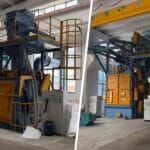
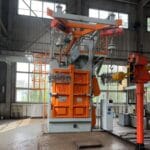
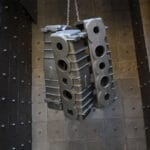
In a wheel-blast machine, rotating blast wheels throw metallic abrasive against the workpiece. The impacts break away mill scale and rust from the exposed surfaces and create a textured steel surface.
The removed debris is separated from the circulating abrasive, which returns to the blasting process. Abrasive recovery and separation are therefore part of normal production.
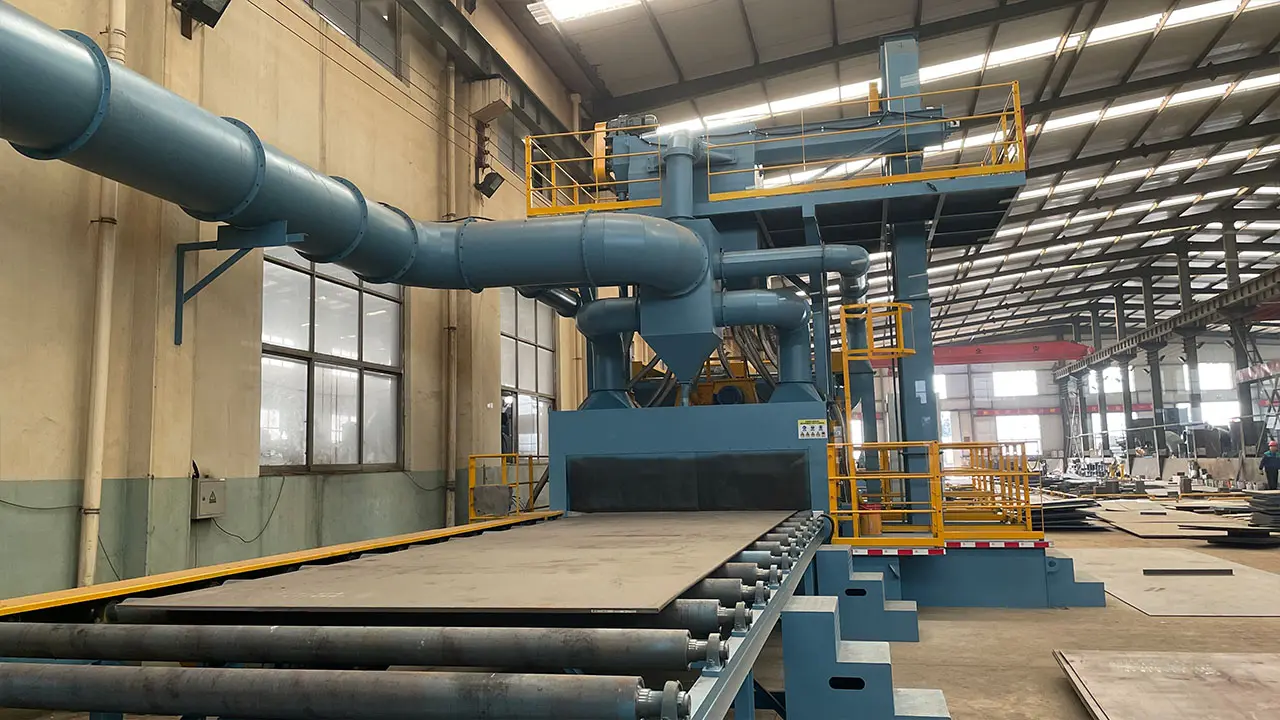
For steel plates and suitable structural sections, a roller conveyor shot blasting machine carries the material through an enclosed blast chamber. This arrangement supports repeated processing along a defined handling route.
The production value is practical: surface cleaning becomes a dedicated stage before coating, with a result that can be inspected against the agreed requirements.
What Needs Checking Before the Steel Is Painted
A clean-looking photograph alone cannot confirm that a surface meets the coating specification. Before painting, the checks should address:
- Visual cleanliness: whether residual scale, rust or other visible contamination is acceptable under the specified preparation grade.
- Surface profile: whether the texture matches the coating manufacturer’s requirements. Cleanliness and roughness are different properties.
- Dust and remaining contamination: whether further cleaning or testing is required by the project specification.
- Surface condition at coating: whether moisture, new rust or handling contamination has developed since blasting.
There is no single roughness value or cleaning grade that suits every coating. The project specification and coating manufacturer’s instructions determine acceptance.
Where It Fits in Steel Plate and Section Production
The application is particularly relevant where plates or sections move through a regular production flow before coating—for example, in steel fabrication, shipbuilding and heavy machinery manufacturing.
HQAMUR supplies roller conveyor shot blasting equipment for steel plates and structural profiles. Where production also requires linked primer application and drying, a steel plate pretreatment line combines those stages with blasting in one workflow.
A standalone shot blasting machine and an integrated pretreatment line perform different scopes of work. The former prepares the steel surface; the latter also incorporates the subsequent coating stages. In either case, the purpose of descaling is to provide the surface condition required for the next operation.