A powder-coating hook carries more than the weight of a part. It also forms part of the electrical path between that part and the grounded hanging system. As overspray accumulates and cures over repeated production cycles, a hook that still holds the workpiece can lose reliable metal-to-metal contact.
Powder coating hook cleaning therefore needs to address the contact areas, not just the visible coating on the rack. Steel shot blasting can form part of that maintenance route, provided the coating and the remaining hook material are suitable for the treatment.
Where shot blasting fits in the cleaning route
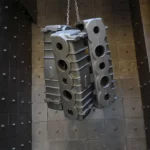
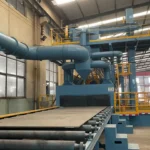
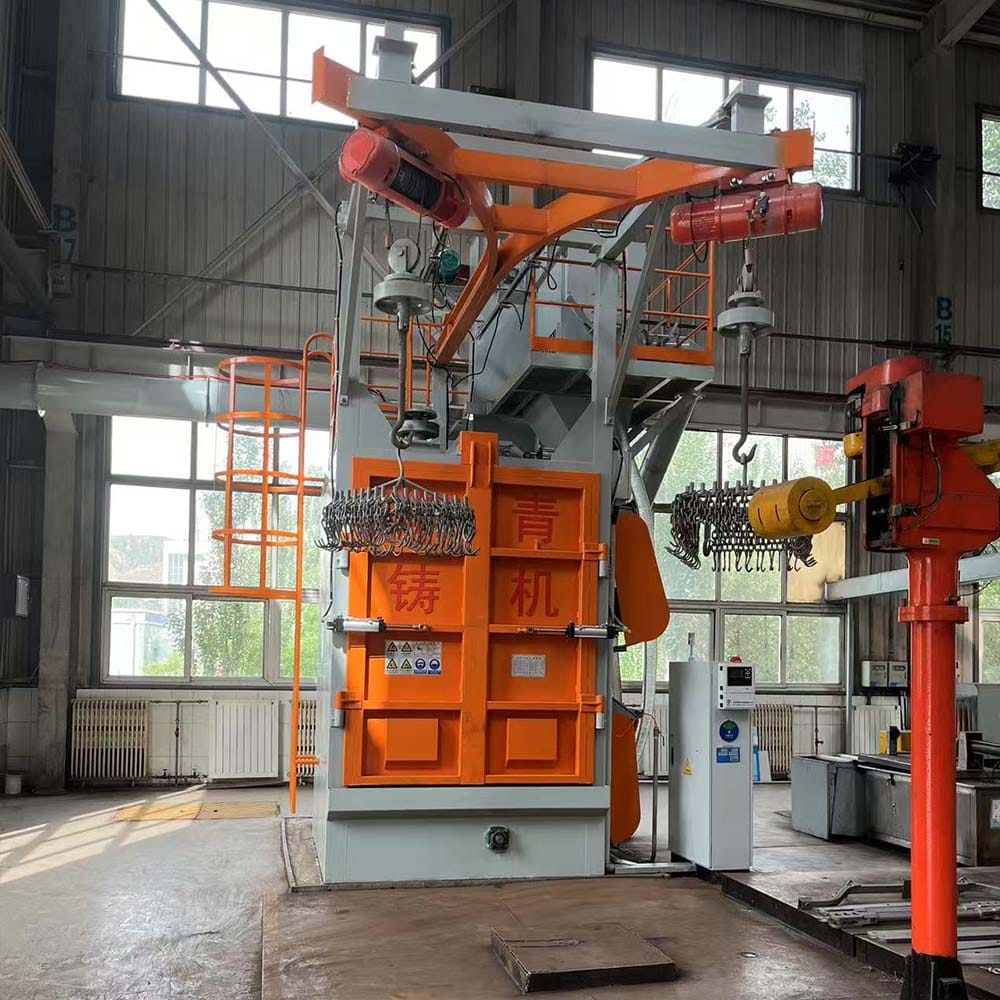
In a wheel-blast machine, rotating blast wheels throw abrasive onto the exposed surfaces. The impacts can fracture and abrade a suitable cured coating, or remove residues left by an approved stripping process. Rack joints, bends and contact tips must be exposed to the abrasive; a clean outer frame does not confirm that these areas have been reached.
There are two different jobs here: removing the original coating and cleaning up after it has been broken down. A thick, tough accumulation may respond poorly to direct blasting. In that situation, another stripping stage may be needed before mechanical cleaning. Thermal treatment followed by blasting is an established industrial approach, but it is not appropriate for every hook or clip material.
A representative used hook is a better basis for a cleaning trial than an uncoated sample. It shows how the actual coating comes away and whether the treatment affects the contact tip, wire section or shape. A trial on one coating does not establish performance on every powder formulation or thickness.
The abrasive recovery and dust extraction arrangement also needs to suit the coating residues. A machine used for rust removal should not be assumed ready for paint stripping without checking that duty.
What to check before the rack returns to service
The useful question after cleaning is whether the hanging system is ready to do its job again. Three checks matter:
Contact areas: inspect the hook-to-part and hook-to-rack interfaces for remaining insulating coating. Verify the assembled grounding path under the coating equipment manufacturer’s procedure; exposed metal alone is not an electrical test.
Remaining residues: remove loose coating fragments, dust and retained abrasive from joints and bends before the rack goes back to the coating area.
Hook condition: check for thinning, cracks, distortion and damaged contact points. Stripping removes buildup; it does not restore lost metal or the original strength of a worn hook.
Cleaning frequency should follow the observed buildup and the line’s maintenance requirements. A fixed number of trips through the booth will not suit every coating, rack design or production schedule. Equally, a freshly stripped rack does not rule out other causes of poor coating performance.
HQAMUR manufactures hook type shot blasting machines for suspended workpieces. For steel coating hooks and racks, the proposed cleaning route needs to be checked against the actual coated items and their reuse requirements. Photos of the buildup and a used sample give the HQAMUR team something concrete to assess.