Maintaining a consistent surface finish and managing total cost of ownership depends directly on the stabilization of the abrasive working blend inside your storage hopper—known as the operating mix. Many manufacturing plants experience erratic descaling speeds and unpredictable anchor patterns simply because their maintenance crews add new media in bulk without tracking the operating mix balance of the shot blasting machine. Because diverse metal workpieces involve distinct metallurgy and contamination profiles, applying a one-size-fits-all approach to media replenishment creates operational bottlenecks.
Application-Specific Media Calibration Standards
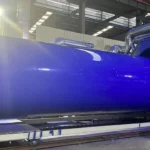
1. H-Beam & Steel Plate Pretreatment / Shipbuilding & Marine Engineering
The Technical Bottleneck: Removing high-hardness mill scale from structural steel profiles and wide plates while preventing excessive downstream coating consumption.
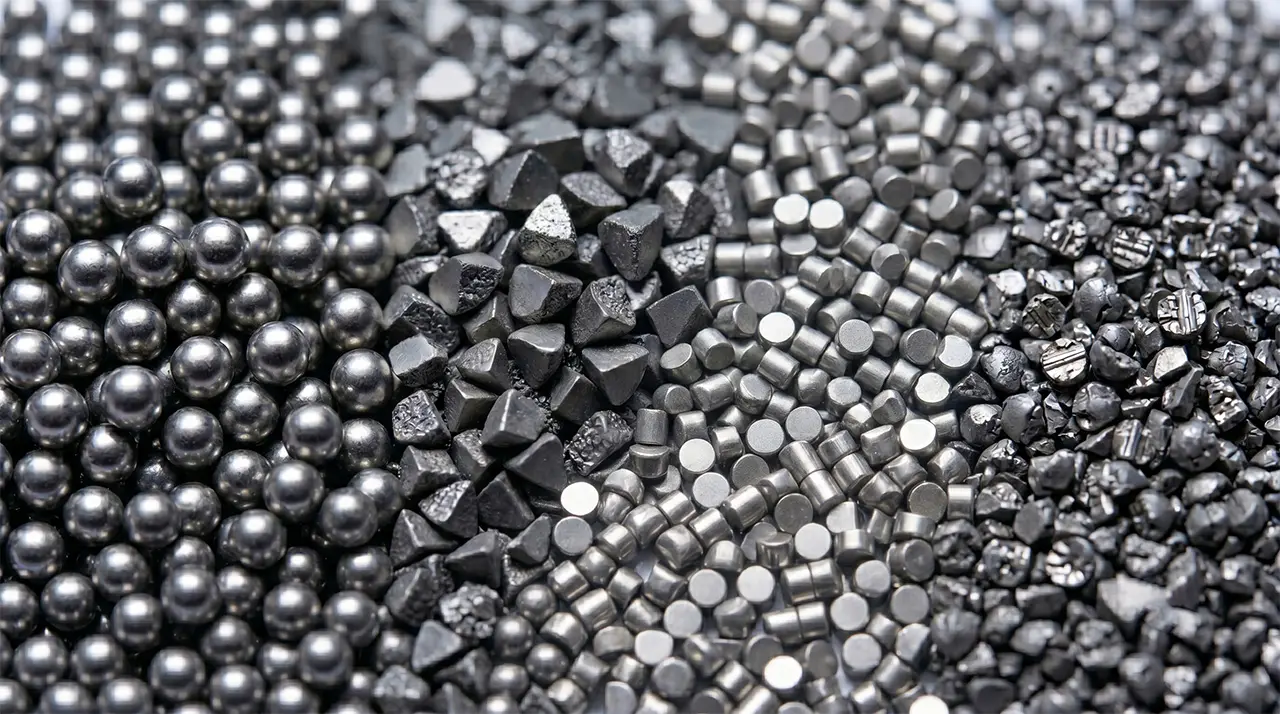
The Operating Mix Strategy: A calibrated combined matrix consisting of 30% spherical steel shot (such as S390 or S460) and 70% angular steel grit (such as G25 or G40). Driven by high-efficiency blast wheels, the spherical shots utilize kinetic mass to fracture heavy structural scale, while the angular grit scours away fine atmospheric rust to create a precise anchor profile (Rz between 45 to 75 microns). This balance ensures rapid processing cycles on a heavy-duty roller conveyor pretreatment line while avoiding irregular, deep peaks that act as a mechanical sponge, absorbing excessive paint primer to meet the required Dry Film Thickness.
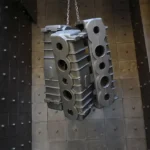
2. Automotive Castings & Forgings / Heavy-scale Industrial Castings
The Technical Bottleneck: Rapid surface cleaning, flash removal, and cross-component homogenization without altering dimensional tolerances or causing component deformation.
The Operating Mix Strategy: A 100% spherical, low-diameter media setup utilizing fine steel shot (such as S110) or stainless steel cut wire shot. The dynamic working blend inside the automated rubber tumble belt machinery must stabilize at 70% rounded, mature conditioned media and 30% new small replenishment media. This high-density, low-impact blast stream maximizes single-pass impacts per second, ensuring efficient blast cleaning within complex internal recesses while completely eliminating the risks of component nicking and collision damage on sensitive automated molding lines.
Systematic Integration of the Dust Collector Loop
Regardless of the target workpiece geometry, the pulse-jet cartridge dust collector parameters must be synchronized with the machine’s PLC framework. If the static extraction velocity is uncalibrated and set too high, productive intermediate-sized conditioned media is prematurely drawn into the waste hopper, inflating your operational overhead. Precision balancing ensures that only non-productive metallic dust is evacuated, maintaining structural emission standards below 10 mg/m3 while stabilizing the operational baseline.