The Harsh Operating Cycle of Railway Rolling Stock
Railway freight car bogies, cast side frames, and structural bolsters operate under extreme dynamic loads. During transcontinental heavy-haul coal, ore, and chemical freight transit, these structural assemblies are continuously subjected to severe track hunting, constant vibrations, high-tonnage shifting weights, and environmental moisture exposure.
During their standard operational lifecycle and planned maintenance overhauls, these grey iron or low-alloy steel castings exhibit two persistent quality failure risks:
Micro-Plastic Deformation and Structural Fatigue Crack Generation: Under heavy-haul stresses, tensile residual stress fields build up at geometric notches, weld lines, and central radius junctions of the bolster. If untreated, these tensile fields cause grain boundaries to micro-slip, initiating sub-surface fatigue cracks that expand over hundreds of thousands of rail kilometers, risking catastrophic running derailed wheel accidents.
Severe Pit Corrosion Interlocking with Underframe Grit: Flaking rust combined with hard track ballast debris creates highly abrasive, corroded surfaces around critical frame brake configurations and axle headings. Traditional chemical or manual scraping cannot restore the bare metallic surface necessary to run reliable Non-Destructive Testing (NDT) inspections before rebuilding.
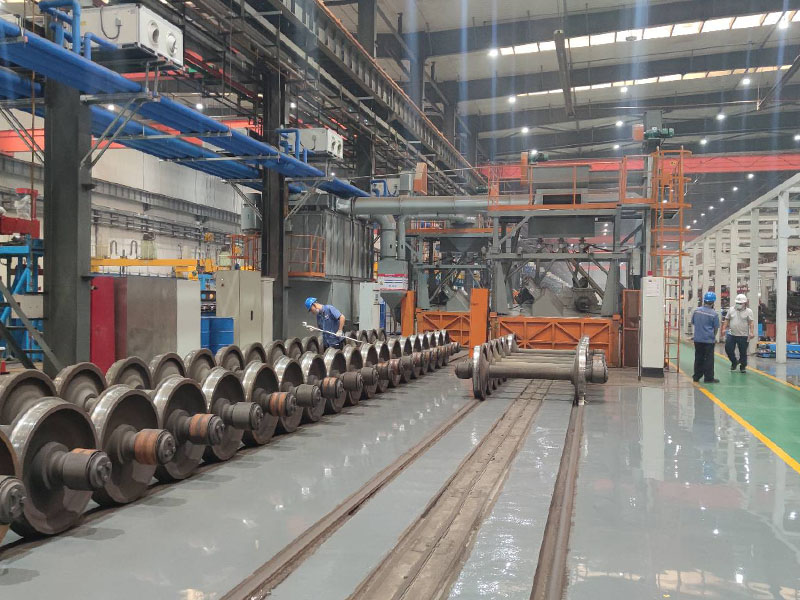
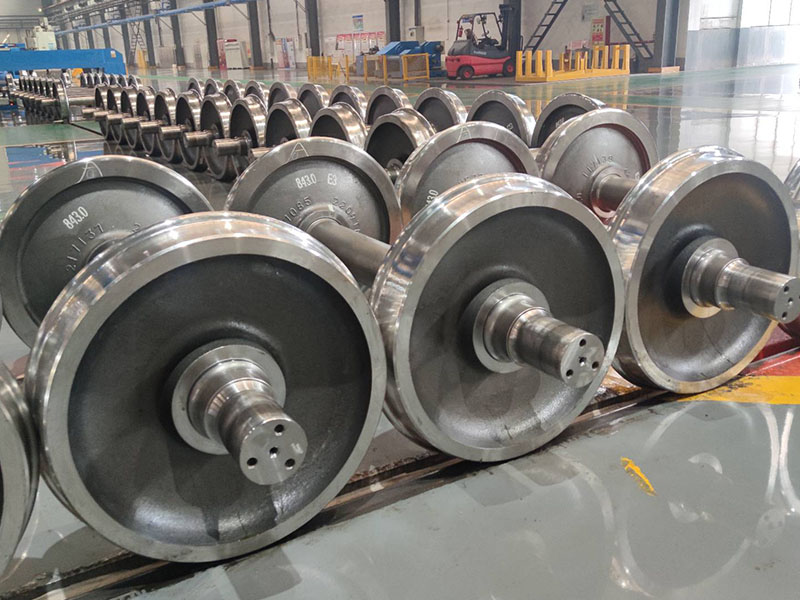
Shot Blasting vs. Shot Peening: The Strategic Process Division
A major technical error in many rail maintenance depots is treating blasting and peening as the same process. For high-compliance railway vehicle overhauls, they serve completely different metallurgical functions:
1. Industrial Blasting: The Definitive Cleanliness Tool for NDT Preparation
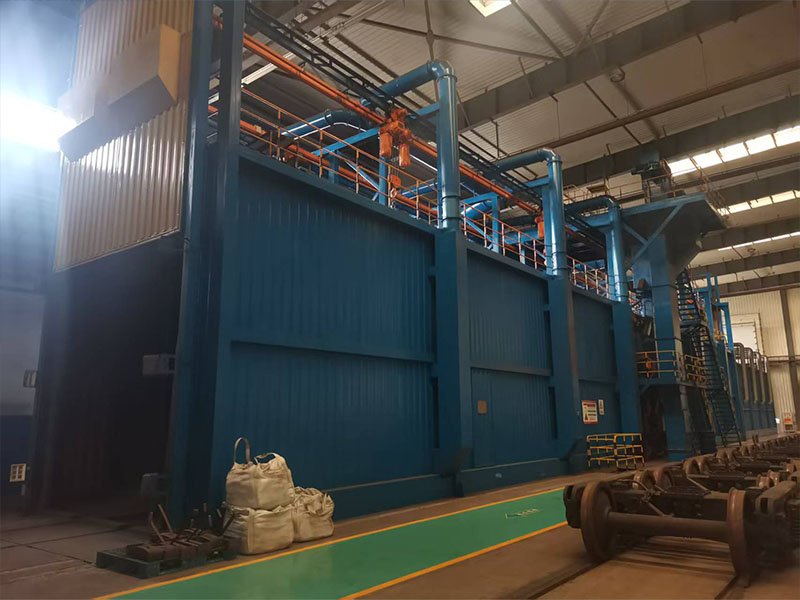
The primary objective of standard automated high-efficiency shot blasting (using sharp steel grit or angular media running at 70 meters per second) is purely mechanical cleaning. It forcefully strips away decades of accumulated carbon grease, thick scale layers, and persistent rust from cast bogie frames, achieving a uniform Sa2.5 to Sa3 cleanliness grade. Stripping the metal entirely bare removes the physical layer hiding subsurface flaws. This pristine cleaning allows fluorescent magnetic particle inspection (MPI) systems to run with 100 percent detection accuracy, catching hairline cracks before the bogie component is certified for welding repair or returned to active rail service.
2. Precision Shot Peening: The Metallurgy Tool for Fatigue Life Doubling
In contrast, precision shot peening (utilizing high-uniformity, spherical cast steel shots with controlled coverage metrics) is a mechanical surface modification process rather than a cleaning step. It target-bombards vital elastic and structural load-bearing elements like railway bogie coil springs, leaf springs, and wheel axels. Every individual spherical impact behaves like a microscopic hammer blow, stretching the outermost surface layer plastically. As the underlying elastic core metal grains force back against this strain, it builds a deep, consistent layer of residual compressive stress. This compressive layer actively clamps micro-cracks shut, multiplying the fatigue limit and operational life of rail springs by up to 200 percent.
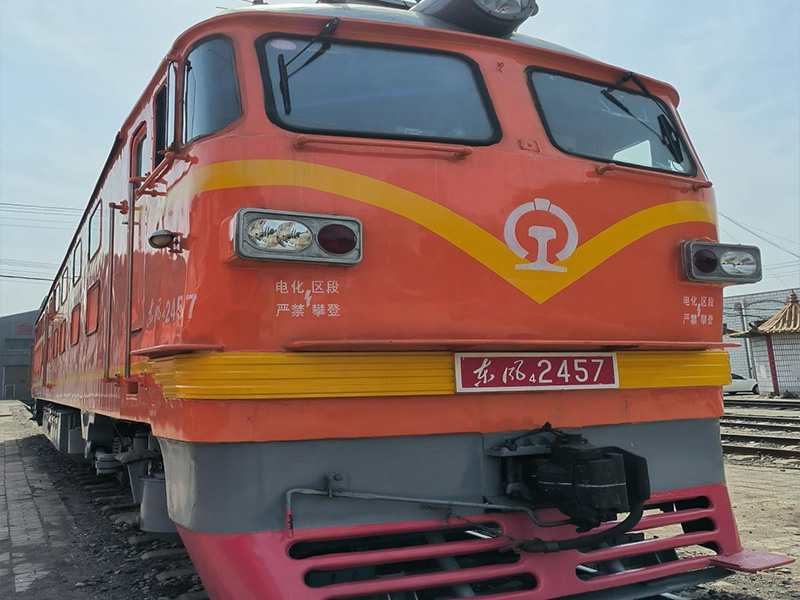
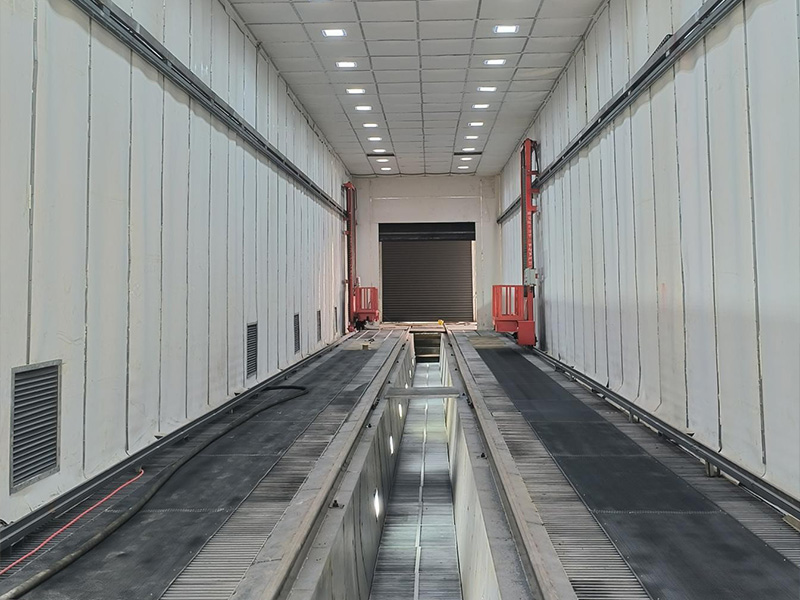
Technical Bottlenecks Solved by Railway Maintenance Blasting Lines
1. Blast Medium Classification and Continuous Separation Challenges
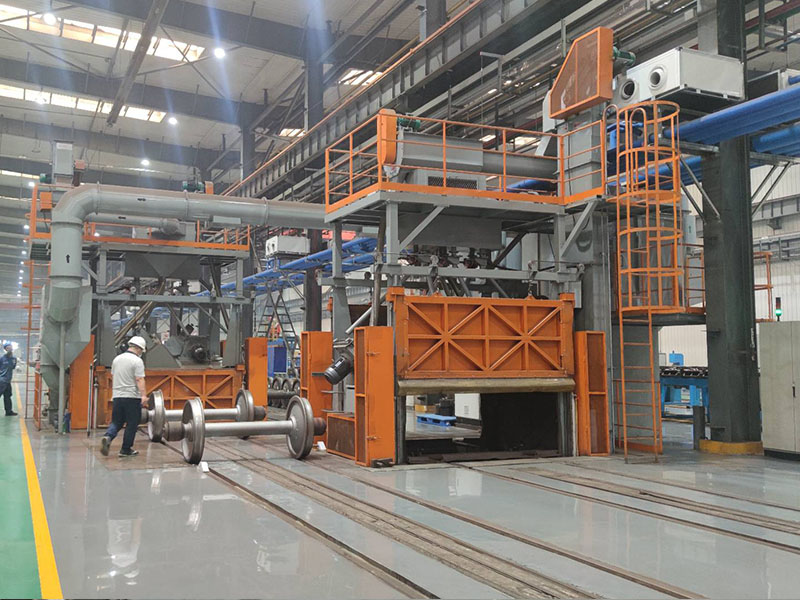
Bogie frames arriving at repair depots are caked with heavy grease and rail dust. During blasting, this oily sludge coats the steel grit recycling loop. If uncleaned, the grit agglomerates, clogs the feed gates, and causes erratic cleaning results. Professional railway overhaul systems incorporate multi-stage heating air-wash separators and specialized electrostatic sand-oil extraction units. These technologies continuously flush oil contaminants and fine dust from the steel abrasive mix, keeping the cutting grit sharp and maintaining a stable operating mix hour after hour.
2. Automated Dual-Station Controlled Spring Peening
To achieve an audit-compliant peening effect on critical bogie suspension springs, the high-velocity stream must impact both the exterior curvature and the deep interior coils uniformly. Specialized spring peening lines utilize dual-station motorized rollers that rotate each heavy coil spring at an exact helical speed. Simultaneously, multi-angle overhead blast wheels accelerate steel shots into the inner profiles programmatically. This coordinated movement delivers a uniform 100 percent peening coverage score, completely eradicating structural weak spots where fatigue fractures originate.
Meeting Rigorous Global Railway Regulatory and Audit Compliance
For railway maintenance facilities and wheelset workshops striving to achieve component certified ratings under international bodies like the Association of American Railroads (AAR), CRRC QA Standards, or European Union UIC directives, process reliability is paramount. These rail authorities require precise traceability regarding the exact surface profile roughness and the specific Almen strip intensity validation scores recorded during peening.
Transitioning from erratic hand cleaning to advanced, digitized shot blasting and peening lines allows railroad depots to streamline their overhaul schedules while maintaining absolute quality metrics. The resulting components showcase a robust finish engineered to handle severe service loads and ensure long-term heavy-freight track security.