The Water-Borne Paint Revolution and Production Beat Challenges
Standard marine freight containers operate under unyielding corrosive exposure, enduring constant salt spray, heavy UV radiation, and severe mechanical impacts during global intermodal transit. Historically, the container manufacturing sector relied on solvent-based zinc-rich primers, which offered a forgiving tolerance toward minor substrate imperfections. However, global environmental mandates targeting Volatile Organic Compounds (VOCs) emissions have forced an industry-wide transition to eco-friendly water-borne paint systems.
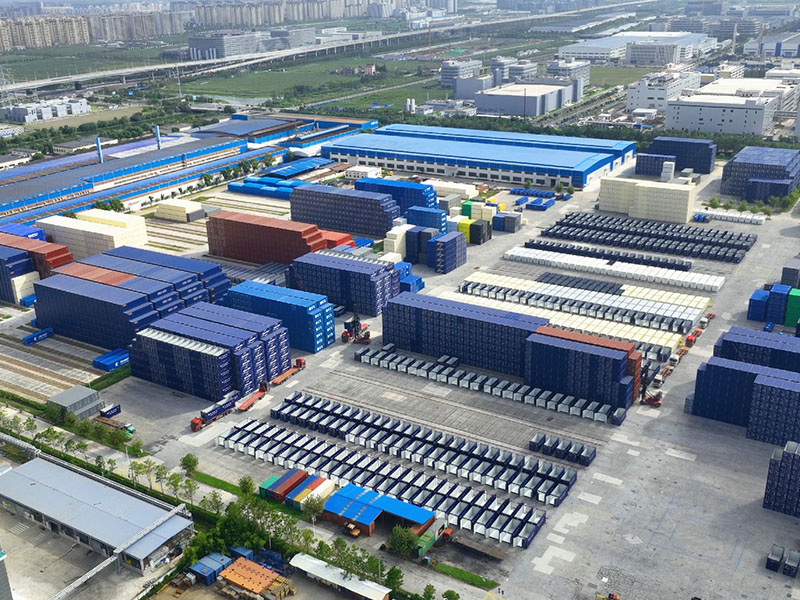
For container plant managers, this regulatory shift introduces a severe technical conflict: water-borne coatings are highly sensitive to base metal topography and cleanliness.
Unlike solvent paint, water-borne primers fail to bond if microscopic traces of soluble salts, mill scale dust, or loose rust are present on the steel sections (such as Corten-A atmospheric corrosion-resistant steel). Any localized contamination triggers osmotic blistering and early paint delamination. Furthermore, a modern ISO container factory operates on a relentless manufacturing pulse, often requiring a fully treated corrugated panel or container frame to roll off the line every 2 to 3 minutes. Traditional compressed air manual blasting rooms are an absolute bottleneck; they are slow, labor-intensive, and produce catastrophic volumes of toxic airborne dust.
Closed-Loop Shot Blasting as the Core Technical Enabler
To satisfy both the extreme cleanliness required for water-borne paint adhesion and the high-speed throughput of modern container assembly lines, plants must deploy automated high-velocity shot blasting machinery as a definitive engineering treatment:
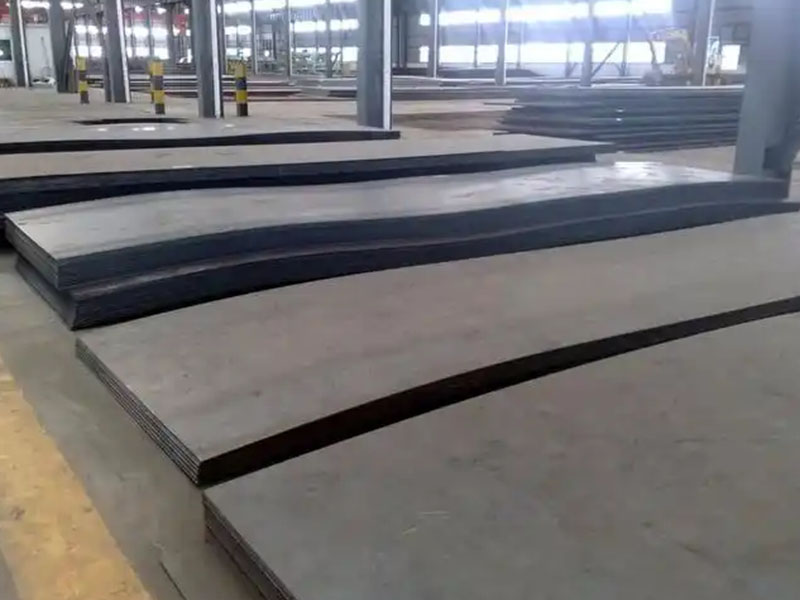
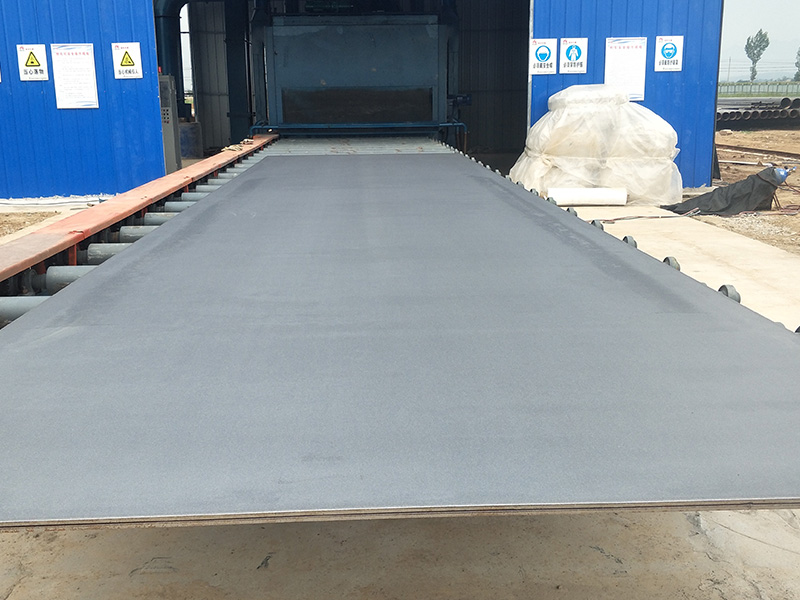
1. Eradicating Micron-Scale Salt and Dust Contamination
Professional container blasting lines integrate a high-volume, multi-stage air-wash separator that continuously purges the abrasive recycling stream. By maintaining a pristine mix of round steel shots and steel grit, the system achieves a strict Sa2.5 to Sa3 cleanliness grade (ISO 8501-1). This mechanical action strips away non-visible crystalline salts and micron-level mill scale embedded inside the steel corrugated peaks. This leaves a chemically clean, bright-gray surface that allows water-borne primers to achieve maximum intermolecular cross-linking.
2. Guaranteeing a Peak-to-Valley Uniform Profile
Water-borne primers have higher surface tension and lower wet-film thickness consistency over sharp metal ridges compared to solvent options. If the surface profile is too jagged (Rz value exceed 80 microns), the paint film will pin-hole at the micro-peaks; if too smooth, it will sag and peel. Automated high-efficiency blast wheels rotating at programmatically controlled RPMs generate a tightly clustered micro-roughness profile (Rz = 40 to 60 um). This uniform anchoring tooth ensures the water-borne primer coats the valleys and peaks with a perfectly consistent film thickness, eliminating premature rust bleeding.
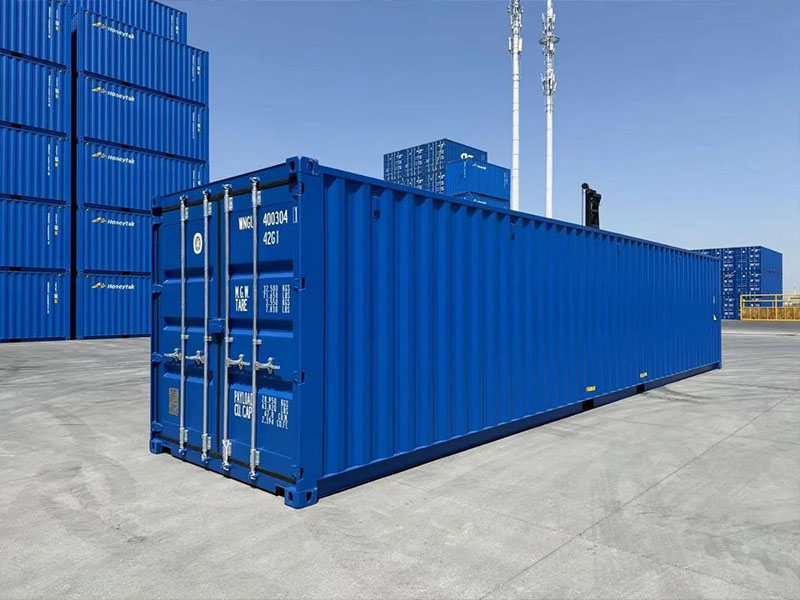
Technical Bottlenecks Solved by High-Volume Container Processing Lines
Processing a massive, hollow structural object like a standard 40-foot container or its continuous plate components at a 2-minute cycle time presents severe mechanical handling and environmental constraints:
1. Zero-Emission Dust Extraction via High-Face Velocity Cartridge Filters
Blasting Corten-A steel sheets at high throughput generates immense volumes of toxic sub-micron metal and scale dust per hour. To meet rigid environmental compliance (such as OSHA or European Union emissions capped under 5 mg per cubic meter), the equipment must utilize advanced downward-flow pulse jet cartridge dust collectors. These systems maintain a precise air-to-cloth filter ratio and high face velocity, trapping 99.9 percent of airborne particles and safely self-cleaning without halting the fast-paced continuous manufacturing line.
2. Symmetrical Through-Feed Multi-Wheel Layout
A standard container has multiple flat panels, corner posts, and heavy base longitudinal beams welded together. To avoid manual repositioning, heavy-duty Roller Conveyor Through-Feed Systems or specialized Overhead Monorail Chain Lines deploy a multi-axis array of 8 to 16 high-power blast wheels. These wheels are positioned symmetrically using 3D blasting simulation software, discharging abrasives at cross-angles simultaneously. This configuration ensures that both the protruding corrugated ridges and the deeply recessed internal sills are cleaned to an identical Sa2.5 standard in a single continuous linear pass, achieving massive daily container throughput.