The Fatigue and Corrosion Stress in Heavy Machinery Components
Heavy construction and mining machinery—such as hydraulic excavators, mobile cranes, and massive crawler chassis—operate under some of the most punitive field conditions on earth. Components like excavator booms, arms, and crane telescopic sections are fabricated from premium high-strength low-alloy (HSLA) steels to minimize deadweight while maximizing lifting capacities.
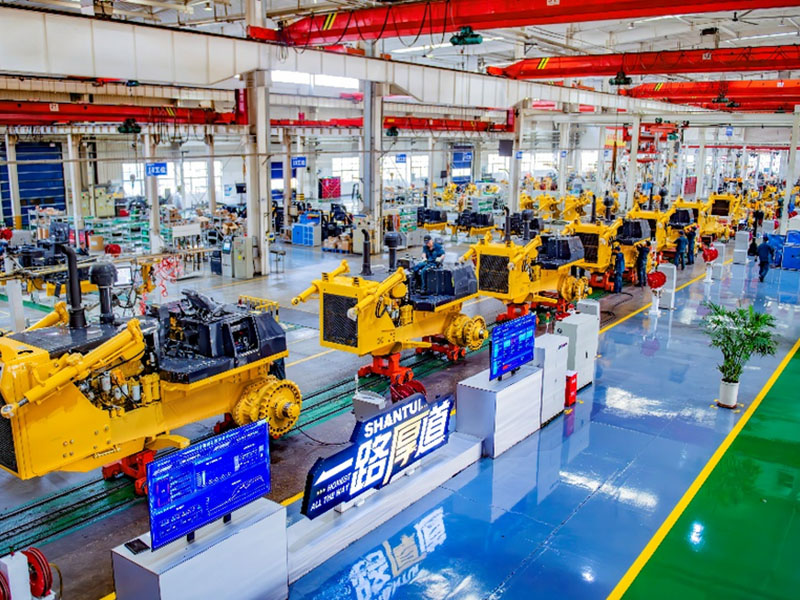
However, these structural steel assemblies undergo extensive multi-pass welding, which introduces massive thermal gradients and heavy weld spatter. For quality directors, this fabricated state creates two critical engineering liabilities:
Tensile Residual Stress Concentration: The rapid cooling of thick weldments leaves severe tensile residual stresses concentrated directly within the weld toes and Heat-Affected Zones (HAZ). Under the relentless, cyclic shifting loads of quarry excavation or heavy crane lifting, these tensile stresses pull the metallic grain boundaries apart, accelerating fatigue crack initiation and leading to sudden, catastrophic structural failure in the field.
Coating Failure from Welding By-Products: High-heat welding leaves tenacious silicon slag, carbonized black oxides, and micro-spatter tightly bonded around the welded seams. Standard commercial paints cannot bond to these brittle chemical by-products. If uncleaned, the coating layers will peel off at these micro-zones within months of outdoor operations, exposing high-strength steel to rapid moisture penetration and stress corrosion cracking (SCC).
Shot Blasting as a Dual Performance Enabler
Relying on manual angle grinders to clean multi-ton boom assemblies is an engineering bottleneck that yields highly erratic surface quality. Professional, automated high-velocity shot blasting provides a repeatable, mechanical treatment that solves both surface cleanliness and subsurface metallurgy.
1. Mechanical Micro-Peening and Stress Relief
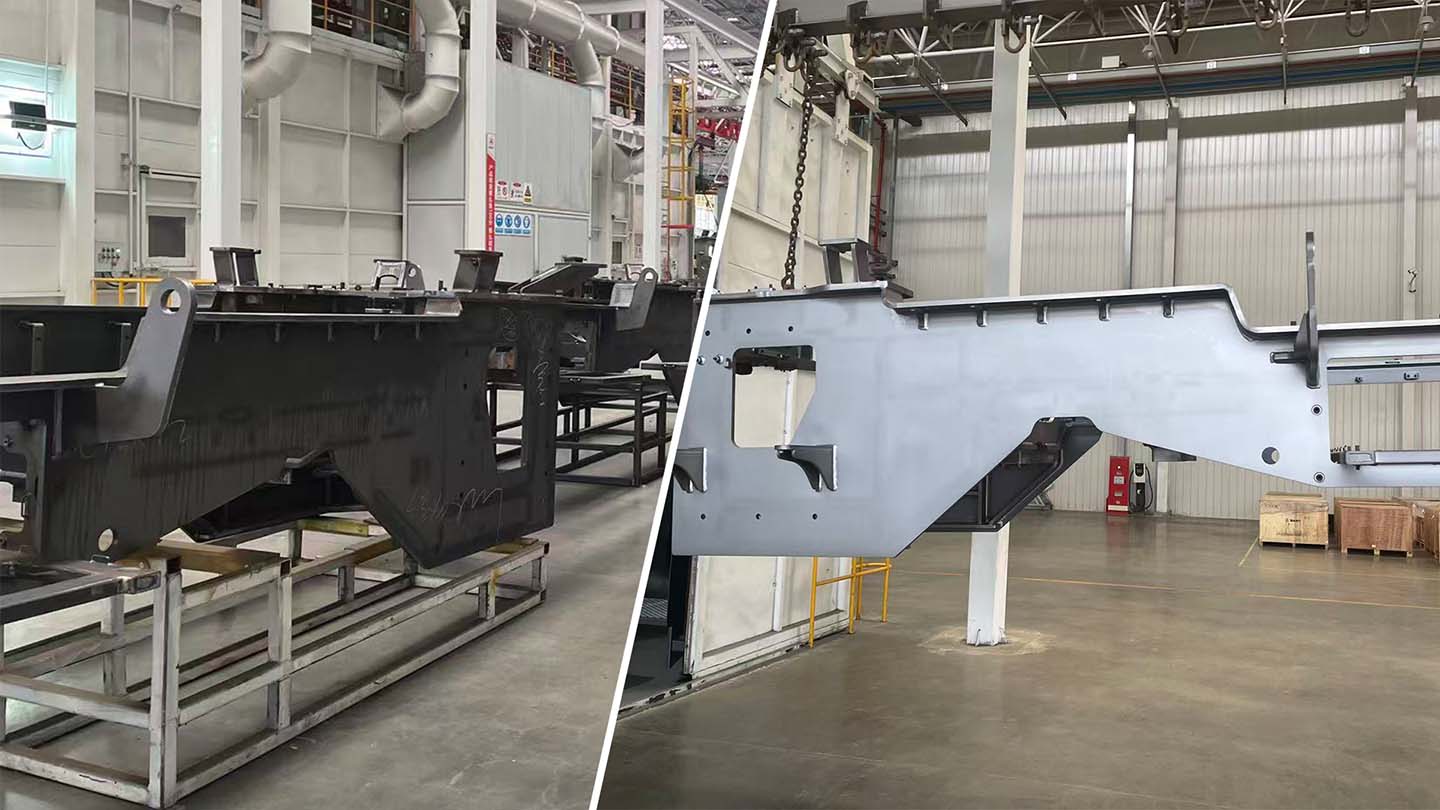
When an advanced blast wheel directs a high-density torrent of high-carbon spherical steel shots against the welded structure at velocities exceeding 75 meters per second, the kinetic bombardment induces heavy localized plastic deformation on the metal profile. As the elastic core of the steel resists this displacement, a uniform, continuous layer of residual compressive stress is introduced into the surface (reaching depths up to 0.2 to 0.5 mm). This compressive layer actively neutralizes the dangerous tensile stresses from welding, closing microscopic grain gaps and significantly extending the fatigue life of excavator and crane components.
2. Perfect Anchor Pattern for Marine-Grade Coatings
Beyond mechanical strengthening, the multi-angled impact strips away 100 percent of tough welding slag, scale, and spatter, achieving a strict Sa2.5 cleanliness grade (ISO 8501-1). Concurrently, it creates a highly uniform, micro-textured surface profile with a roughness rating optimized at Rz = 40 to 75 um (microns). This distinct micro-topography provides the ideal mechanical tooth for high-performance polyurethane or epoxy coatings, ensuring the paint system survives extreme UV, chemical mud, and salt-fog exposure without blistering.
Technical Bottlenecks Solved by Engineering Machinery Blasting Lines
When blasting multi-ton, oddly shaped weldments like excavator booms or crane chassis, a standard off-the-shelf blasting machine will fail due to high mechanical wear and dead-zone coverage. Heavy-duty construction machinery lines require specific engineering designs to handle these massive elements:
1. Eliminating Internal Abrasive Trapping via Heavy-Duty Blow-off Stations
Excavator booms and box columns feature complex interior stiffeners and multi-chamber structures. During the blasting cycle, thousands of pounds of steel shots get trapped inside these blind pockets. If not evacuated, this adds parasitic weight to the monorail system and causes massive abrasive waste. Advanced engineering machinery blasting lines integrate automated, high-pressure oscillating air-knife blow-off chambers and mechanical tilting hooks at the exit zone, ensuring 99 percent of trapped steel media is salvaged and returned to the recycling loop before the part exits.
2. Synchronized Heavy Monorail Conveyors with Zero-Oscillation Hooks
An 8-ton welded structural assembly possesses immense inertia when moving through a blast zone. Traditional hanging chains will swing under the high-velocity impact of multiple blast wheels, damaging the chamber walls and misaligning the pre-set blasting angles. Heavy machinery lines utilize heavy-duty rigid monorail conveyors combined with dual-chain anti-sway hooks, securing the massive boom sections rigidly while rotating them under the programmed kinetic torrent of the blast streams.
Meeting Rigorous Global Construction OEM Compliance
For tier-1 fabricators supplying global infrastructure giants like Caterpillar, Komatsu, Sany, or XCMG, a surface preparation system is more than a cleaning tool—it is a gatekeeper for quality compliance. These OEMs enforce strict engineering specifications regarding the maximum allowed weld spatter count per square meter and microscopic micro-fissure presence under fluorescent testing.
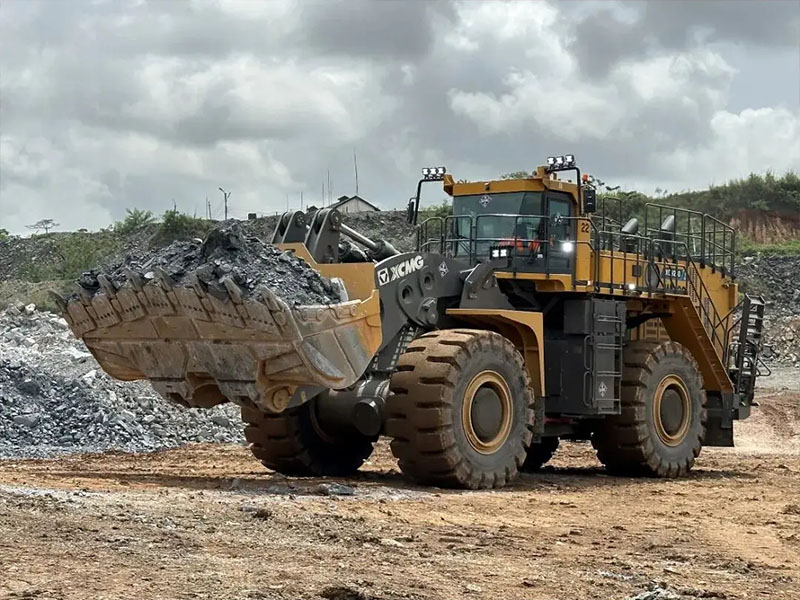
By moving away from erratic manual cleaning and adopting digitalized, multi-angle mechanical shot blasting, fabrication plants can secure an uninterrupted production beat that perfectly matches modern robotic welding and high-bake paint lines. The resulting metallic finish secures absolute coating adhesion and reliable weld-toe residual stress compression, satisfying both rigorous field durability expectations and corporate supply chain audits.