Process Overview & Structural Requirements
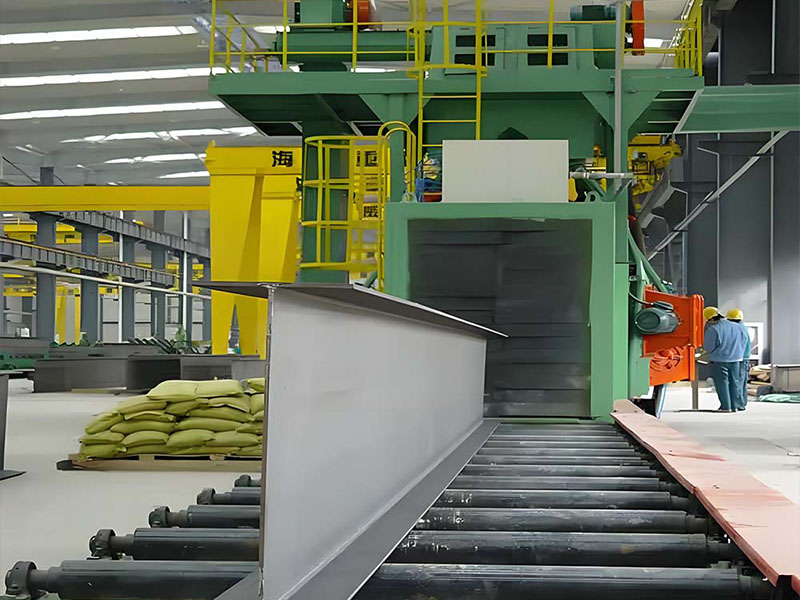
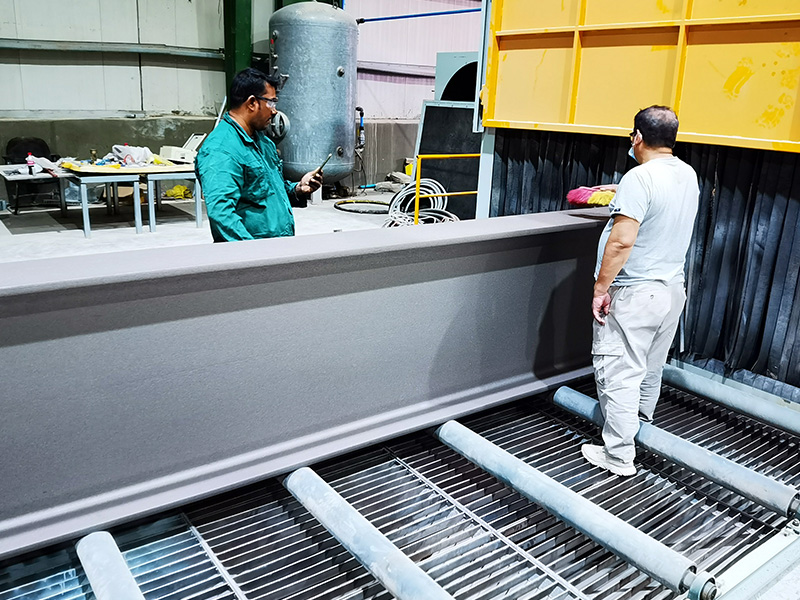
Achieving an Sa 2.5 surface cleanliness profile (ISO 8501-1) on structural steel profiles—such as H-beams, channels, and heavy plates—is a mechanical prerequisite for high-performance marine and industrial coating systems. This technical guide outlines the operational calibration, abrasive operating mix management, and mechanical line speed parameters required for high-throughput roller conveyor shot blasting machines to maintain compliant near-white metal blasting without inducing substrate work hardening.
International Standard Equivalence & Visual Specifications
| ISO 8501-1 Specification | SSPC / NACE Equivalent | Certified Surface Condition |
|---|---|---|
Sa 1 |
SSPC-SP7 / NACE No. 4 |
Light blast cleaning; loose mill scale, rust, and foreign matter removed. |
Sa 2 |
SSPC-SP6 / NACE No. 3 |
Thorough blast cleaning; substantial scale and rust removed; firmly adhering residues acceptable. |
Sa 2.5 |
SSPC-SP10 / NACE No. 2 |
Near-white metal; 95% of surface free from all visible residues; slight streaks/stains permitted. |
Sa 3 |
SSPC-SP5 / NACE No. 1 |
Blast cleaning to visually pure steel; uniform white metal finish; zero mill scale or oxide residues. |
Critical Parameters for Roller Conveyor Line Calibration
A. Abrasive Operating Mix Optimization
Maintaining a compliant Sa 2.5 or SSPC-SP10 finish requires a controlled operating mix inside the storage hopper. The engineered matrix demands 70% Steel Shot (S330 to S460) to deliver the kinetic energy required to fracture tenacious mill scale, blended with 30% Steel Grit (G40 to G50) to provide angular shearing action for a sharp Rz anchor profile, typically between 40 to 75 microns.
B. Blast Wheel Velocity and Positioning Metrics
High-capacity roller conveyor systems processing heavy structural weldments rely on a multi-wheel interlocking layout to eliminate mechanical shadows. Direct-drive blast wheels must maintain a linear blade velocity between 75 and 80 meters per second, with the variable frequency drive calibrated to approximately 2900 RPM. Lower velocities fail to clear the oxide layer in H-beam inner recesses, while excessive velocity risks part deformation on thinner cross-sections.
Technical Checklist for Field Production Managers
Ammeter Equilibrium Calibration
Monitor the blast wheel control panel daily. All motors must operate at 85% to 90% of full rated amperage. A sudden drop indicates an abrasive low-level fault in the air wash separator hopper.
Air Wash Separator Airflow Metrics
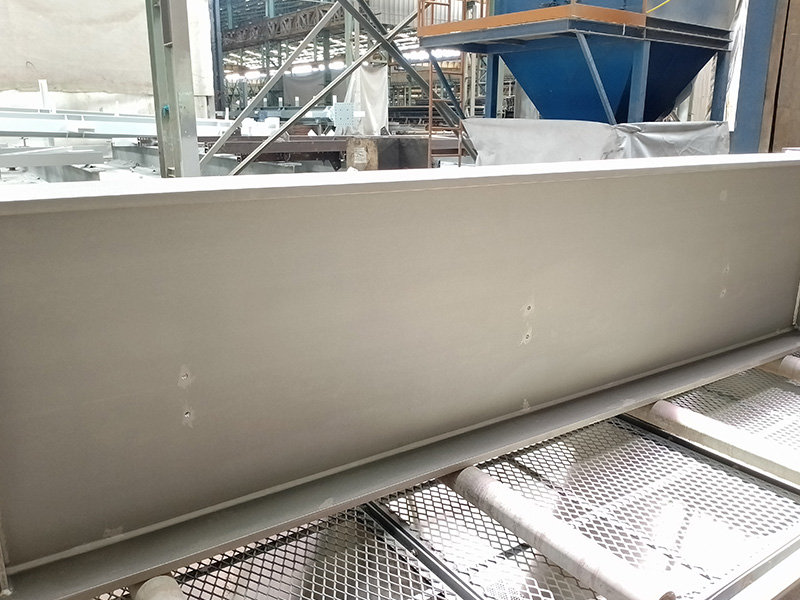
Inspect the static pressure of the dust collector system at the separator plenum. Inadequate air velocity permits fine fines and broken abrasive to re-enter the blast cabin, contaminating the silver-gray Sa 2.5 metal substrate with dark dust residues.
Throughput Speed Synchronization
For standard Grade B rust surfaces on structural profiles, synchronize the roller conveyor inverter speed to 1.2 – 2.5 meters per minute. Adjust downward for Grade C rust to maintain compliance without secondary reprocessing.